Body Language Workshop
Body Language Workshop
One of our finest programmes, this workshop bestows upon you the ultimate power to peek into the minds and hearts of people you interact with. Body speaks more than words. Harness its power.
One of our finest programmes, this workshop bestows upon you the ultimate power to peek into the minds and hearts of people you interact with. Body speaks more than words. Harness its power.
“A Game-Changer”
“A Game-Changer”
Research
1. First Impression :
People form judgments about trustworthiness, competence, and likability in under 7 seconds.
(Source : Janine Willis & Alexander Todorov, 2006)
2. The 7-38-55 Rule :
Albert Mehrabian’s research in 1970s showed that 55% of human communication is non-verbal. Mehrabian’s 7-38-55 rule :
• Words = 7% of impact.
• Voice tone = 38% of impact.
• Body language = 55% of impact.
(Source : Silent Messages by Albert Mehrabian, 1971)
3. Body is a Mirror :
Your confidence, authority, credibility and openness are all visible on your body. You cannot hide them. Your posture influences how others see and judge you.
(Source : Carney, Cuddy & Yap, 2010, Psychological Science)
2. 100 Milliseconds :
People unconsciously decide whether you are trustworthy or not within 100 milliseconds of seeing your face.
(Source : Todorov et al.. 2009, Social Cognition)
“What You Risk Losing”
“What You Risk Losing”

Opportunity Cost
1. Failed Interviews and Career Loss :
The opportunity cost of poor body language skills is huge, especially when it comes to the job market. You are more likely to fail interviews and lose promotions in your career if you cannot perceive and produce the desired body language for the job.
2. Poor Impact on First Impressions :
People form impressions in milliseconds. Without a structured training, you cannot perceive the micro expressions on someone’s face as well their quick bodily reactions. Moreover, you may unintentionally project insecurity, disinterest, or even distrust. The worst part : you won’t even know what went wrong.
3. Poor Persuasive Power :
Leaders with effective nonverbal skills are rated as more competent, persuasive, and trustworthy (Riggio & Feldman, 2005). Without a formal training, you risk being overlooked. Poor persuasive power is the death of a Salesman.
4. Failed Emotional Connection :
With poor body language, you will struggle to connect emotionally in your personal relationships. You may unintentionally produce incorrect body languages, resulting in conflicts and heartbreaks.
5. Poor Display of Confidence :
Nervous habits (fidgeting, slouching, avoiding eye contact) will undermine your presence. No matter how confident you feel inside, the signals you give out with you body will be your measurement. Training helps you replace negative habits with strong, open, and confident ones.
6. Poor Overall Communication :
55% of human communication is non-verbal. So, poor body language really handicaps you a communicator. Even if you say the right words, the way you say it may dilute or even contradict your message. Your words must align with your gestures, expressions, and tone of voice.
“Body Language Workshop”
“Body Language Workshop”
Core Framework
Core Framework
1. Face.
- First Impressions.
- The Grammar of Expression.
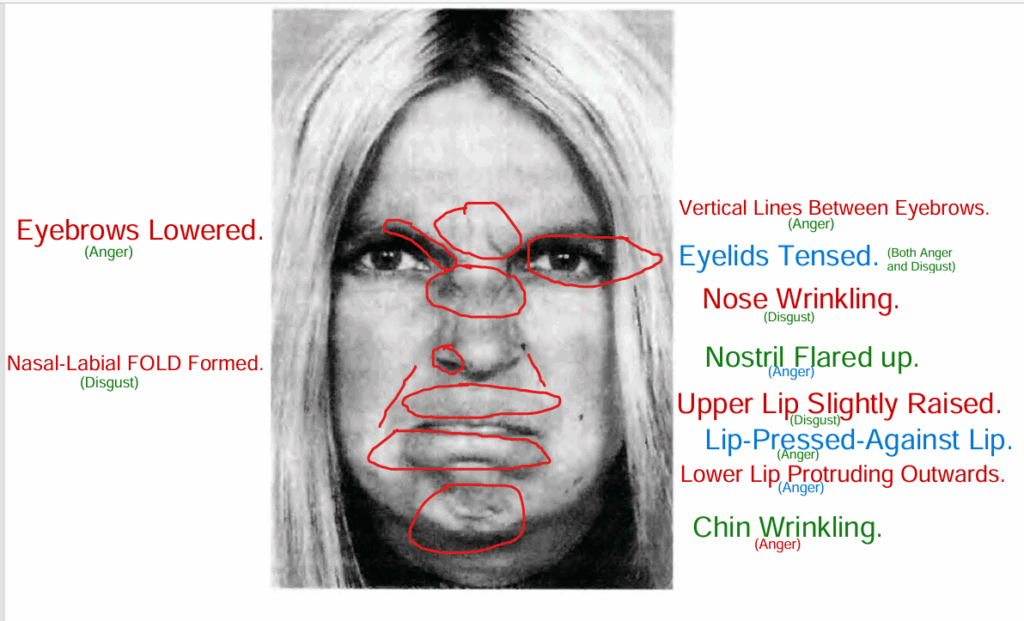
- Universal Emotions Mapping.
- Microexpressions and Leakages.
- The Theatre of Deception.
- Face as a Map of Character.
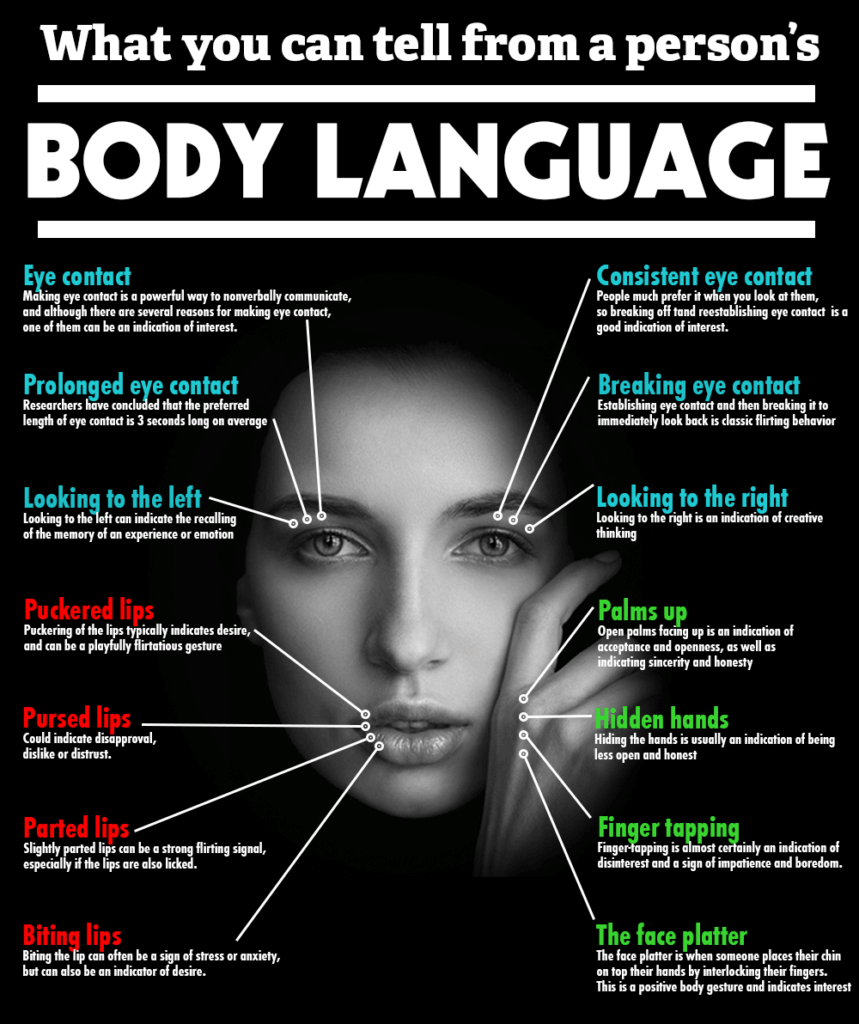
- Eye-Contacts and their Meanings.
- Eyes, Lips, and Sex.
- Context, Culture, and Calibration.
- Face as an Instrument of Influence.
- Applied Facial Intelligence.
- Ethics of Seeing.
2. Body.
- Mind-Body Connection : An Intro.
- Architecture of ease.
- Proxemics and Territorial Intelligence.
- Lower-Body Truths.
- Language of Hands and Arms.
- Comfort-Discomfort Diagnostics.
- Mirroring and Synchrony.
- Leakages.
- Movement and Momentum.
- Many Touches.
- Body as an Instrument of Power.
- Attraction and Sex.
- Under Pressure.
- Applied Body Language.
- Limitations and Ethics.
3. Clothing & Appearance.
- The Semiotics of Dress.
- The Charisma Wardrobe.
- Power Profile.
- Appearance of Approachability.
- Fit, Cut, and Sculpt.
- Color, Texture, and Optics.
- Grooming, Hair, and Cosmetics.
- Body Shape and Silhouette design.
- Capsule Wardrobe and Signature Looks.
- Social and Cultural Dimensions.
- Trends and Consumption.
- Psychology of Beauty and Body Image.
- Sex-Appeal.
- Applied Dress Lab.
- Appearance Bias, Limitations, and Ethics.
Core Methodology
1. Assessment.
2. Planning.
3. Awareness Training.
4. Mirror Exercises.
5. Peer-Assessment Drills.
6. Perception vs perspective.
7. Modelling.
8. Confidence Training.
9. Role-play.
10. Deliberate Erring.
11. Evaluation.
12. Termination.
Core Methodology
1. Assessment.
2. Planning.
3. Awareness Training.
4. Mirror Exercises.
5. Peer-Assessment Drills.
6. Perception vs perspective.
7. Modelling.
8. Confidence Training.
9. Role-play.
10. Deliberate Erring.
11. Evaluation.
12. Termination.

* Please note that a few of the topics may run parallelly for better impact.
Though serialized, the progression of topics is not necessarily linear.