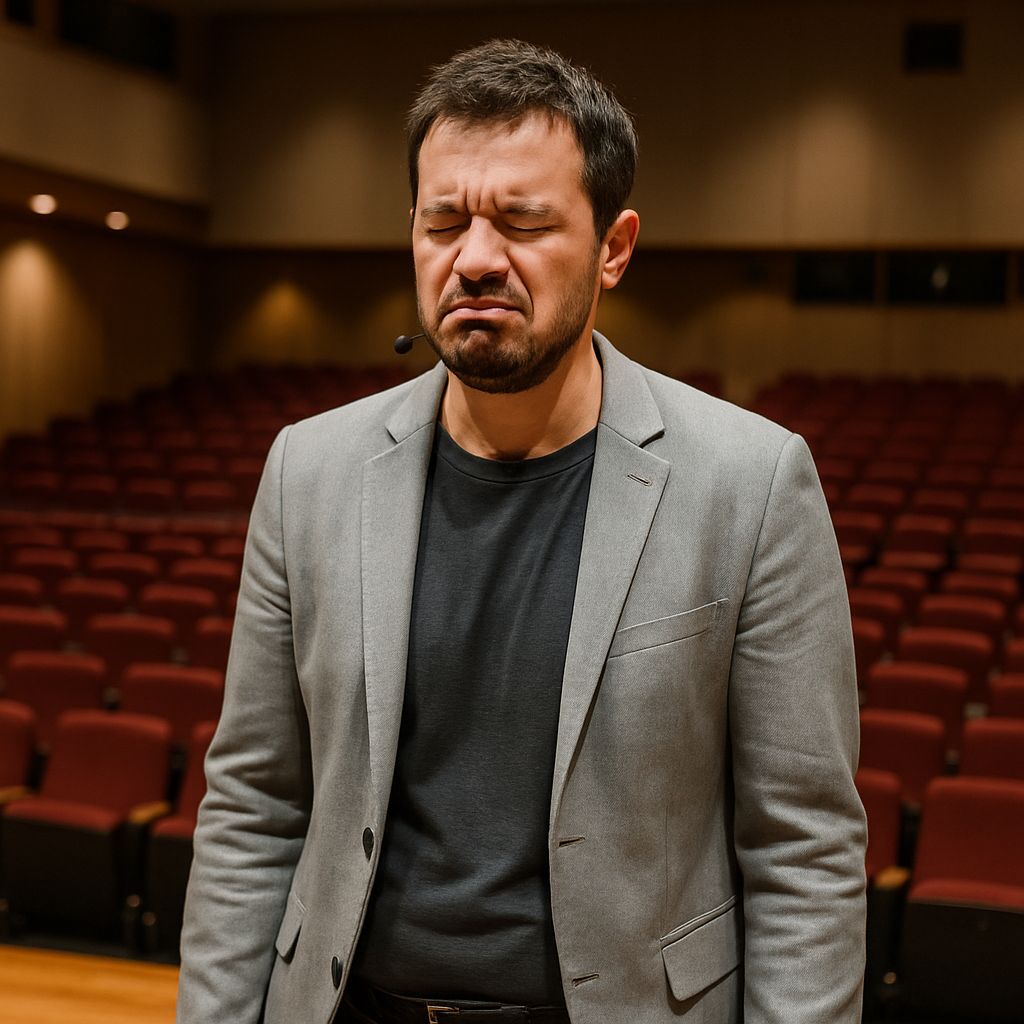
Voice Training
Voice Training
Flagship jewel of Eloquess, this extolled workshop proudly sits at the helm of all soft skills. Master your vocal instrument with a whole repertoire of vocal techniques.
“The Power of Voice”
Research
1. Social Psychology :
We are judged within 7 seconds of communication. Some HR and Business research found this number even lower (in the range of 5-7 seconds). Glasgow University in 2014 found that ‘trustworthiness in a voice’ can be accurately judged within 500 milliseconds of hearing that voice.
(Sources : Willis, J. & Todorov, 2006 ; Thin-slicing research, 1992, Glasgow University, 2014)
2. The 7-38-55 Rule :
Albert Mehrabian’s research in 1970s showed that in conveying emotions and attitudes:
• 55% comes from body language,
• 38% from tone of voice,
• 7% from actual words.
(Source : Silent Messages by Albert Mehrabian, 1971)
“Hate How You Sound?”
18 Common Problems
1. I stammer a lot.
2. People say I am boring.
3. People say I sound robotic.
4. My voice is too thin (like a little girl).
5. I speak too fast.
6. People say I speak with my nose.
7. I speak too slow.
8. My voice is too soft. People cannot hear me.
9. I feel fatigue after a performance.
10. I fail to express the right emotions using my voice.
11. My voice sounds immature and young.
12. People cannot understand what I say.
13. People say I sound uninterested.
14. People say I sound disrespectful and aggressive.
15. I always struggle to get my point across.
16. My voice sounds creaky or raspy.
17. People say I end a statement like a question.
18. I hesitate and mumble a lot.

“Our Voice Training Programme”
Core Framework
Core Framework
1. Body
- Diaphragmatic breathing.
- Posture alignment.
- Key components of voice.
- Resonance mapping and placement.
- Cord activation techniques.
- Tongue fluidity and jaw release.
- Becoming Well-Spoken : Vol. 1
- Mastering the Vocal Instrument : Vol. 1
- Dynamic Voice : Vol. 1 (Tier-3 & 4 members only)
- Voice Transformation Calendar : Vol. 1 (same)
2. Heart
- Perception of vocal emotions.
- Pitch and intonational awareness.
- Tonal coloring drills.
- Contrast pairs and emotional scales.
- Emotional storytelling (short).
- Becoming Well-Spoken : Vol. 2
- Mastering the Vocal Instrument : Vol. 2
- Dynamic Voice : Vol. 2 (Tier-3 & 4 members only)
- Voice Transformation Calendar : Vol. 2 (same)
3. Mind
- Projective techniques.
- The art of whisper.
- Pacing and pausing.
- Phoneme precision training.
- Covert vocal enhancers : Part-I
- Becoming Well-Spoken : Vol. 3
- Mastering the Vocal Instrument : Vol. 3
- Dynamic Voice : Vol. 3 (Tier-3 & 4 members only)
- Voice Transformation Calendar : Vol. 3 (same).
4. Psyche
- Developing signature styles (vocal anchors).
- Power posing and vocal influence.
- Amplitude variation.
- Switching vocal identities (vocal masks).
- Other signature elements (volume, pauses, warmth, etc)
- Covert vocal enhancers : Part-II
- Becoming Well-Spoken : Vol. 4
- Mastering the Vocal Instrument : Vol. 4
- Dynamic Voice : Vol. 4 (Tier-3 & 4 members only)
- Voice Transformation Calendar : Vol. 4 (same).
Core Methodology
1. Assessment.
2. Planning.
3. Exposure.
4. Modelling.
5. Role-play.
6. Deliberate Erring.
7. Confidence Training.
8. Evaluation.
9. Termination.
10. Certification.
Core Methodology
1. Assessment.
2. Planning.
3. Exposure.
4. Modelling.
5. Role-play.
6. Deliberate Erring.
7. Confidence Training.
8. Evaluation.
9. Termination.
10. Certification.
* Please note that a few of the topics may run parallelly for better impact.
Though serialized, the progression of topics is not necessarily linear.